Recovery Happens Somewhere
Why where you live shapes your chances of recovering from addiction, and why Central Europe is a case of its own.
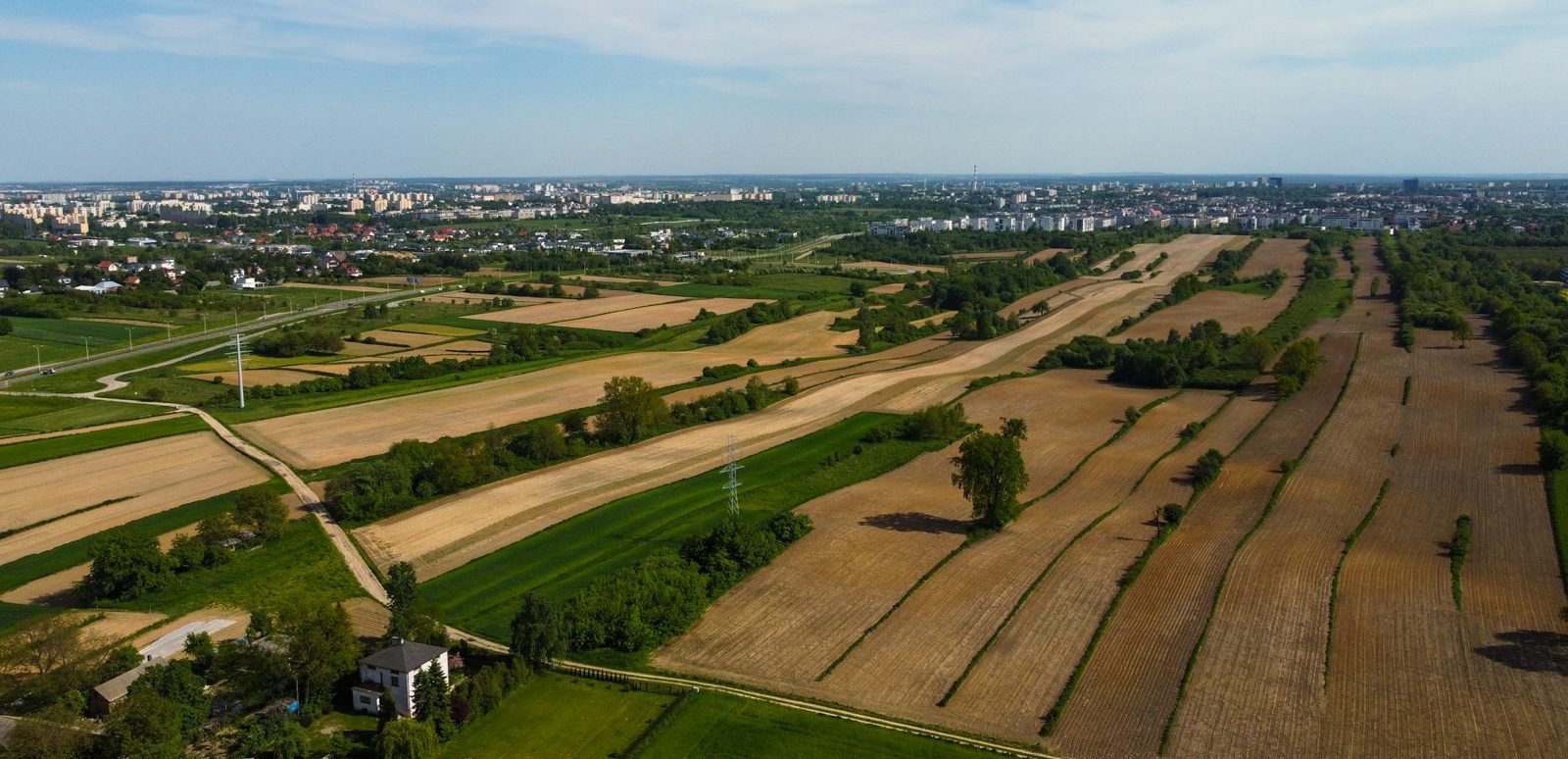
- Photo by Damian Wyroslak on Unsplash
Recovery from addiction has a geography, even though we rarely think of it that way. We usually picture recovery as something that happens inside a person, driven by willpower and by the support of family and friends. Yet recovery also happens somewhere, in a particular town and a particular healthcare system, either within reach of a clinic or far from one. Where a person lives can affect their chances before they ever decide to seek help.
This blog looks at that geography in Central Europe, with special attention to Poland. Poland and its post-socialist neighbours spent decades under state socialism and then went through an abrupt transition to market economies after 1989. Their healthcare systems had to be rebuilt while that transition was still underway.
Addiction shows this history clearly, because for a long time the socialist state preferred not to see it. In Poland, drug addiction was officially cast as “alien to socialism”1, a disease of capitalist societies, and the authorities long refused to acknowledge it. The first help came from outside the system. Monar, founded by the psychologist Marek Kotański in 1978, was only officially approved by the regime in 19812, and Poland passed its first law on preventing drug addiction in 19853.
Alcohol was a different story, since heavy drinking was far too visible to deny. The state did recognise alcoholism, most notably through the 1959 Act on Combating Alcoholism4, but it met the problem with sobering-up stations, compulsory treatment and penal measures5,6 rather than with care. Only in the 1980s and 1990s did addiction begin to be treated as a health problem with a treatment system of its own7. The old geography proved harder to change. By 1990, twelve of Poland’s 49 voivodeships still had not a single addiction treatment bed, and many of the beds that did exist sat in remote rural institutions, placed there to serve compulsory treatment rather than patients5. Today’s treatment infrastructure grew out of that upheaval, and research from Western Europe or the United States explains it only in part.
The blog also joins a community of English-language writers who cover Central and Eastern Europe. Among them are The Central European Blog by Marian Kechlibar, Not Lost, But Waiting To Be Found by Kris Best, Ister by Tomislav Bali, and Based in Bohemia by Rob Cameron. Geographies of Recovery adds health and recovery to the topics they write about.
And who is behind the blog? I’m a geographer, and I currently run a research project on spatial access to addiction treatment across Poland. I have no personal experience of addiction. What is personal is my long-standing interest in it, partly because geography, a field built around asking where things are and why, had mostly left this question alone. The longer version is on the about page of the Substack.
In the coming months I’ll post findings as the research develops and write about how the region’s treatment infrastructure came to look the way it does. Some posts will compare countries, and some will react to books, films and reports from the region that rarely reach readers outside it.
If that sounds worth following, subscribe on Substack.
This post was first published on Geographies of Recovery on Substack.
AI disclaimer: This post was outlined and written by me. AI helped me with language corrections.
References
1 Kramer, J. M. (1990). Drug abuse in Eastern Europe: An emerging issue of public policy. Slavic Review, 49(1), 19–31. https://www.cambridge.org/core/journals/slavic-review/article/abs/drug-abuse-in-eastern-europe-an-emerging-issue-of-public-policy/342E6463BD01BF93F98C83908F462BE7
2 Kowalczyk, A. (1988). Spatial diffusion of social activity: The example of “MONAR” movement in Poland. Miscellanea Geographica, 3, 259–266. https://doi.org/10.2478/mgrsd-1988-030132
3 Konikowska-Kuczyńska, J. (2008). Odpowiedzialność karna za posiadanie narkotyków [Penal law stipulations for drugs possession in Poland: A review]. Alkoholizm i Narkomania, 21(3), 311–322. https://ain.ipin.edu.pl/archiwum/2008/3/t21n3_6.pdf
4 Ustawa z dnia 10 grudnia 1959 r. o zwalczaniu alkoholizmu [Act of 10 December 1959 on Combating Alcoholism]. Dz.U. 1959 nr 69 poz. 434. https://eli.gov.pl/eli/DU/1959/434/ogl
5 Staniaszek, M. (1992). Aktualny model lecznictwa odwykowego i rola izb wytrzeźwień w Polsce [The current model of addiction treatment and the role of sobering-up stations in Poland]. Alkoholizm i Narkomania, 63–99. https://ain.ipin.edu.pl/archiwum/1992/10/AiN_LATO-1992-05.pdf
6 Frankowski, S. J. (1976). Social dimensions of the penal law treatment of alcoholism in Poland. International Review of Criminal Policy, 32, 26–34. https://www.ncjrs.gov/App/Publications/abstract.aspx?ID=75706
7 Moskalewicz, J. (2019). Evolution of alcohol policy in Poland during the transition period. Journal of Health Inequalities, 5(1), 41. https://doi.org/10.5114/jhi.2019.87828